Why Switch to European Infrastructure?
Every claim backed by primary sources. EU regulations, court judgments, and official documents you can verify yourself.
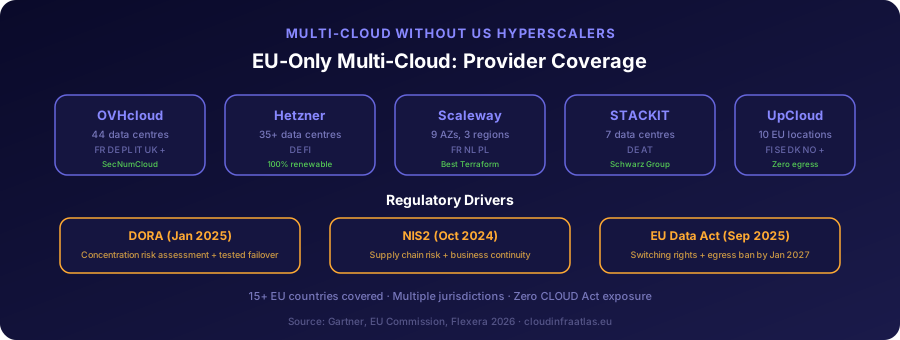
Multi-Cloud Strategy Without US Hyperscalers: Building Resilience on European Infrastructure
Almost every guide to multi-cloud strategy assumes AWS, Azure, and GCP as the building blocks. This article makes the case for an EU-only multi-cloud architecture using European providers — OVHcloud, Hetzner, Scaleway, STACKIT, UpCloud, and others — and examines the regulatory drivers (DORA, NIS2, EU Data Act), practical tooling (Terraform, Kubernetes), and real trade-offs involved.
Regulatory & Legal
EU regulations shaping how data is stored, processed, and transferred.
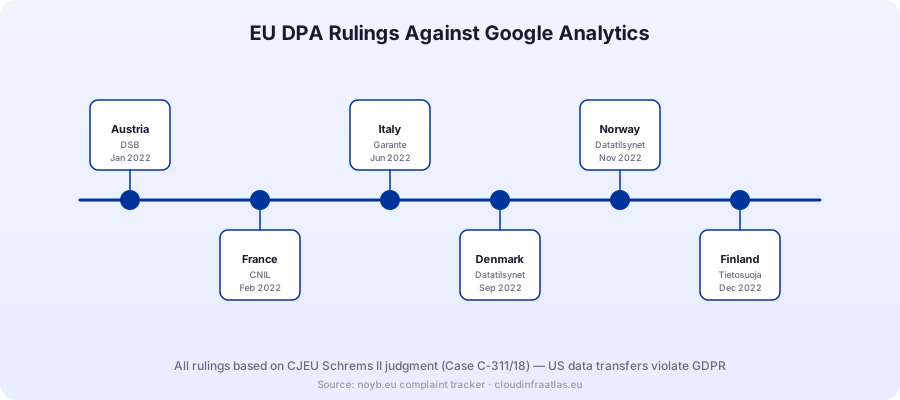
Is Google Analytics Illegal in the EU?
Multiple EU data protection authorities have ruled that using Google Analytics violates the GDPR because it transfers European visitors' personal data to the United States, wher...
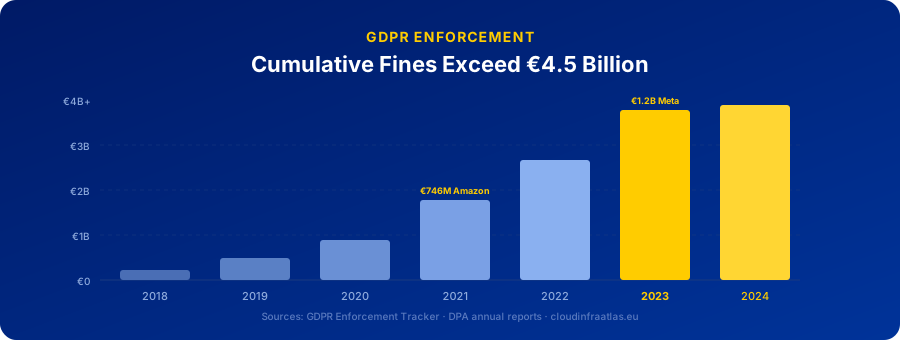
GDPR Enforcement Trends
An analysis of landmark GDPR enforcement actions from 2021 to 2024, including record-breaking fines against Meta, Amazon, and TikTok, and the accelerating trend toward stricter ...
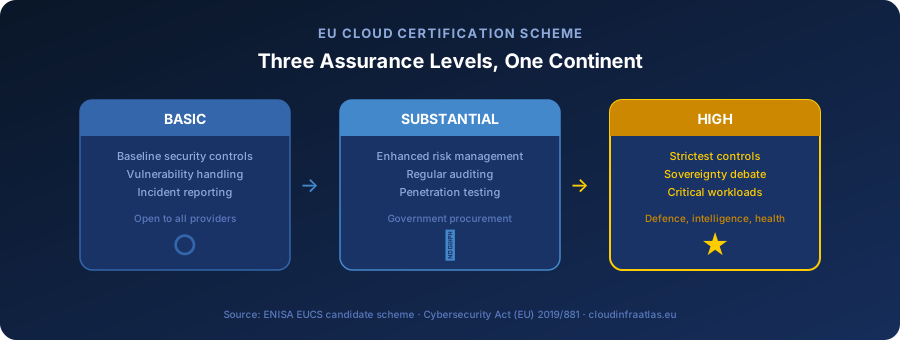
EU Cloud Certification Scheme (EUCS)
The EU Cybersecurity Certification Scheme for Cloud Services (EUCS), developed by ENISA under the Cybersecurity Act, will introduce tiered assurance levels for cloud providers o...
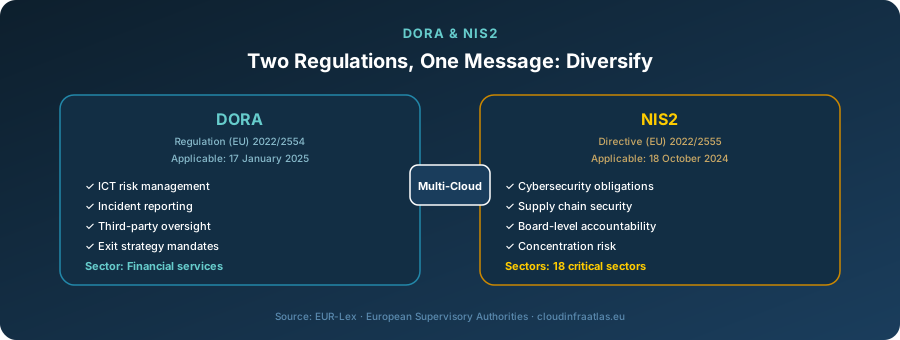
DORA & NIS2: Multi-Cloud Resilience Requirements
The Digital Operational Resilience Act (DORA) and the revised Network and Information Security Directive (NIS2) represent a paradigm shift in how the EU regulates ICT risk. Toge...
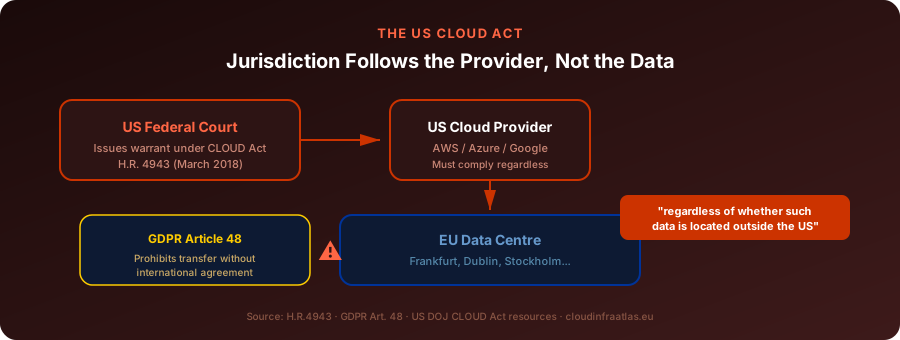
The US CLOUD Act Explained
The Clarifying Lawful Overseas Use of Data Act (CLOUD Act), enacted in 2018, grants US law enforcement the power to compel American technology companies to produce data stored a...
Surveillance & Trust
How US surveillance law reaches European data, and why transatlantic transfers keep collapsing.

EU Data Centre, US Rules: Why Server Location Does Not Protect You
You picked eu-central-1. Your data is in Frankfurt. It never leaves German soil. You feel compliant. But the CLOUD Act lets US courts compel American cloud companies to hand ove...
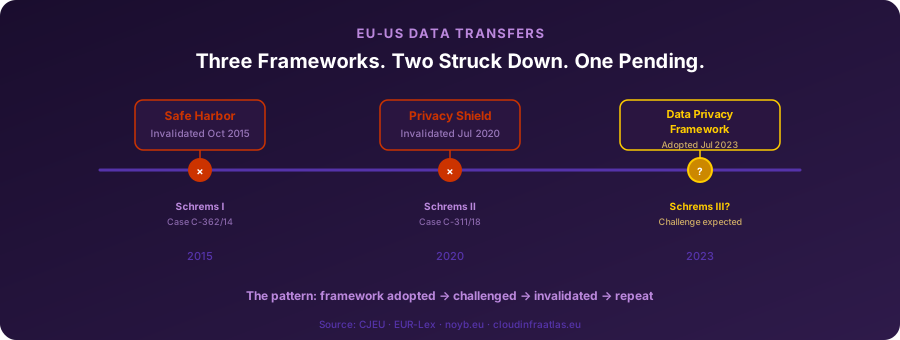
Schrems I, Schrems II & the Fragile EU-US Data Deal
The transatlantic data transfer framework has been struck down twice by the Court of Justice of the European Union, first in Schrems I (2015) and again in Schrems II (2020). The...
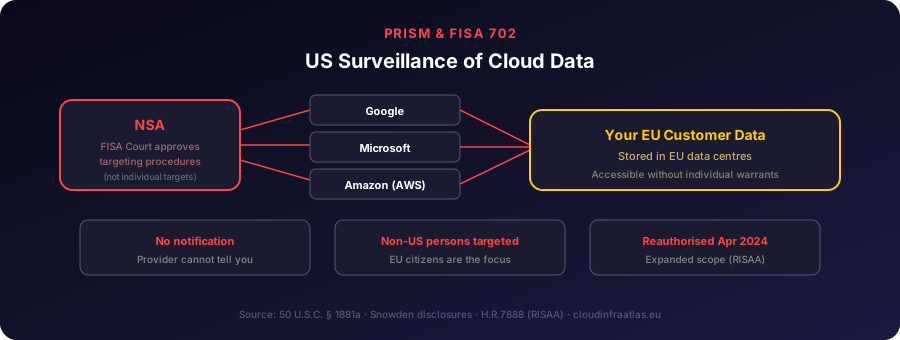
PRISM, FISA 702 & US Surveillance of Cloud Data
Edward Snowden's 2013 disclosures revealed the scale of NSA surveillance programmes targeting data held by US technology companies. Section 702 of the Foreign Intelligence Surve...
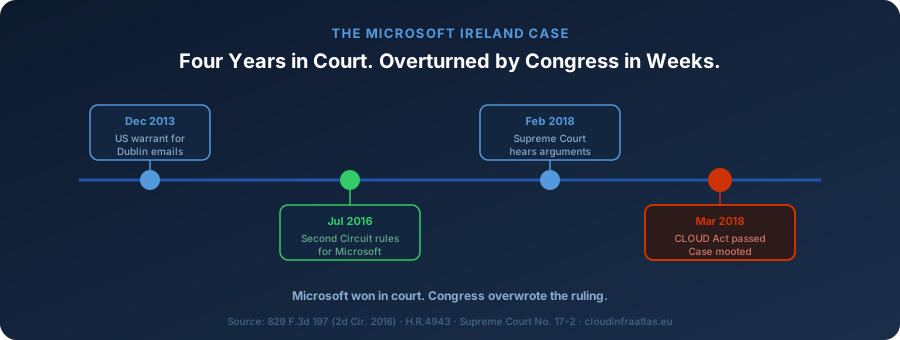
The Microsoft Ireland Warrant Case
In 2013, the US government issued a warrant for emails stored on Microsoft's servers in Dublin, Ireland. Microsoft fought the order through every level of the US federal court s...
Sovereignty & Strategy
What digital sovereignty means in practice: procurement, exit strategies, and vendor lock-in.
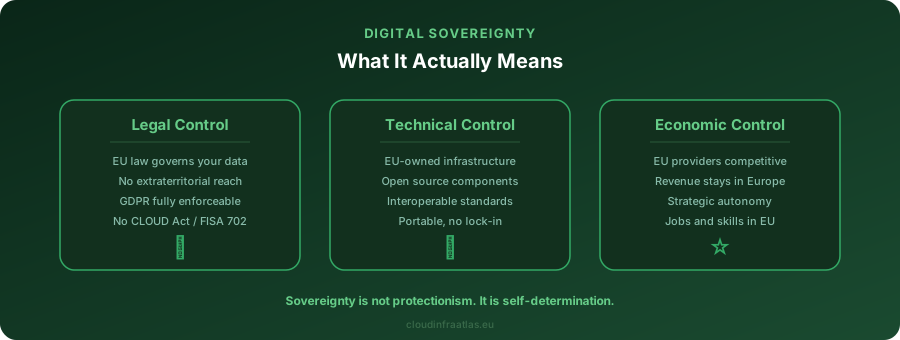
Digital Sovereignty: What It Actually Means
Digital sovereignty has become the defining concept in European technology policy, but it is frequently reduced to a slogan. In practice, sovereignty means the capacity to make ...
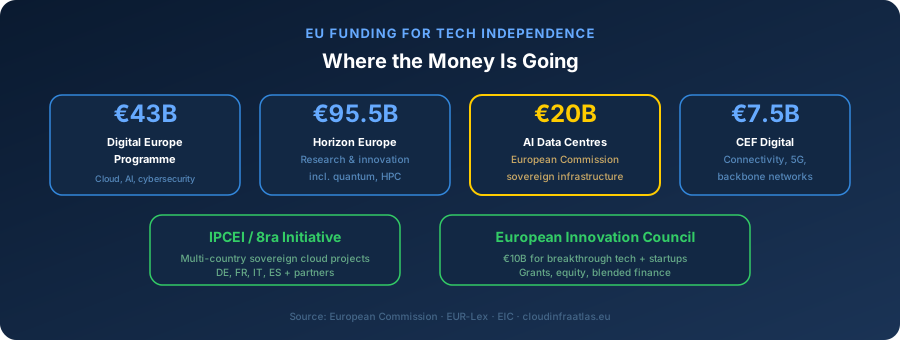
EU Funding for Tech Independence
The European Union and its Member States are channelling billions of euros into cloud infrastructure, AI, semiconductors, and digital public services through programmes includin...
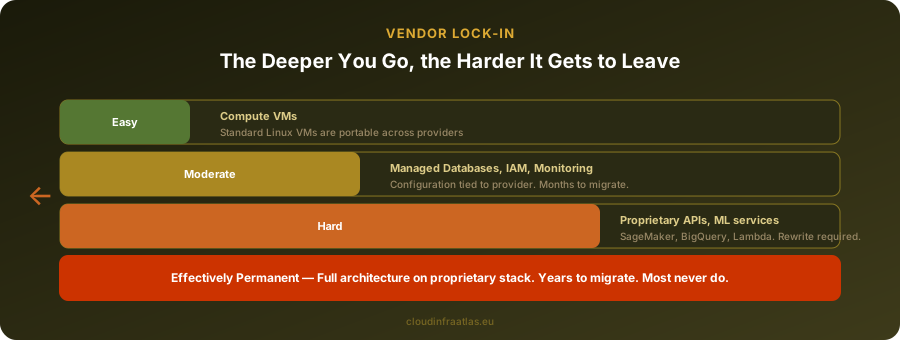
Vendor Lock-in with US Hyperscalers
AWS, Microsoft Azure, and Google Cloud have built business models that make leaving expensive and technically painful. Egress fees, proprietary APIs, tightly coupled managed ser...
Cloud & Infrastructure
The economics, credits, and realities of building on European cloud infrastructure.
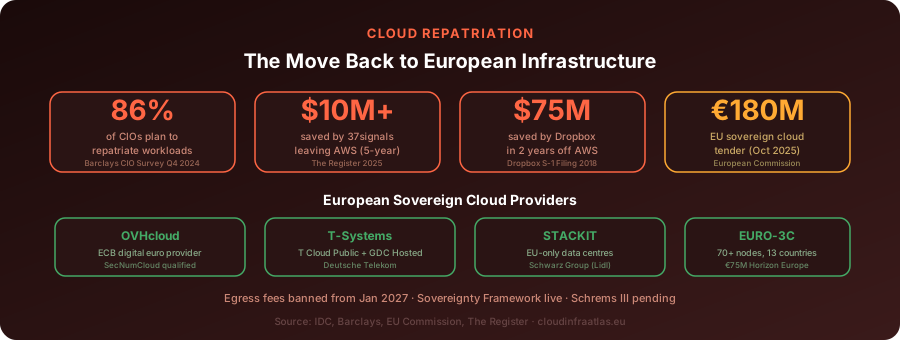
Cloud Repatriation: Why Organisations Are Moving Back to European Infrastructure
Cloud repatriation — moving workloads from public cloud back to on-premises or private infrastructure — is accelerating, with 87% of organisations planning to repatriate some wo...
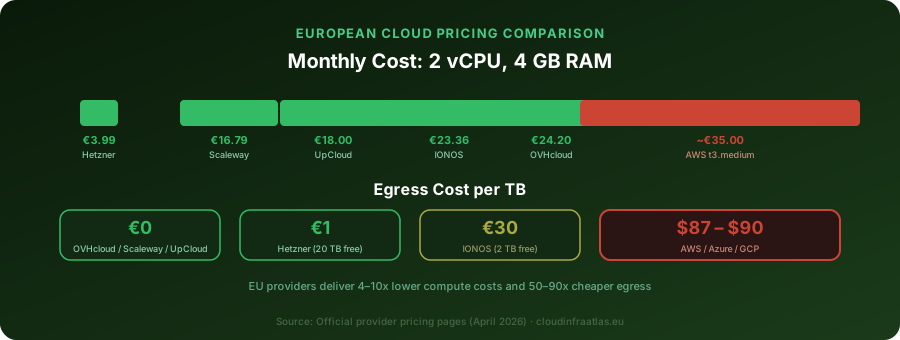
European Cloud Pricing Comparison: How EU Providers Stack Up Against AWS, Azure, and GCP
A data-driven comparison of compute, storage, and egress pricing across five major European cloud providers — Hetzner, OVHcloud, Scaleway, IONOS, and UpCloud — benchmarked again...

How Are EU Startups Supposed to Quit US Cloud?
US hyperscalers hand startups free credits of up to $350,000 while one EU alternative gives €100,000 and the others give a fraction of that. How can the EU possibly achieve digi...
Practical
Real-world migrations, open-source tools, and the European alternatives ecosystem.

Cookie-Free Analytics: The Complete GDPR Compliance Guide
Cookie consent banners are the most hated feature on the internet, and for most websites they are completely unnecessary. If your analytics tool does not use cookies and does no...
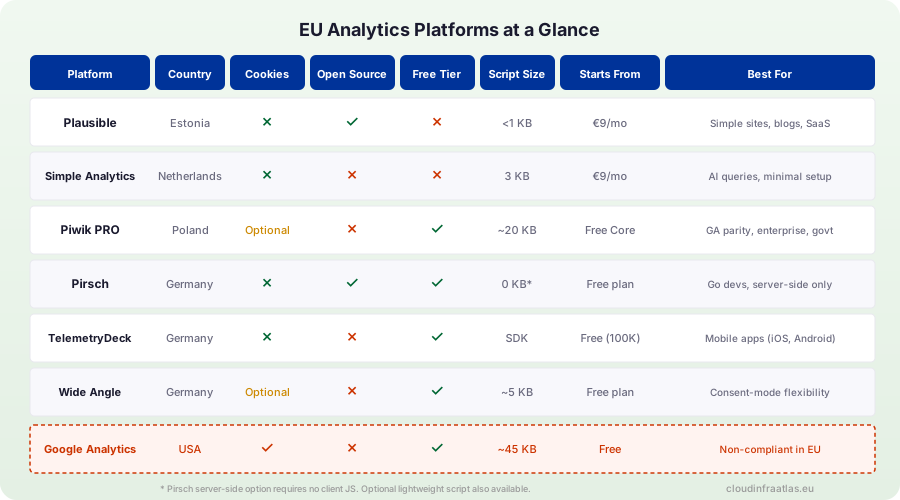
EU Alternatives to Google Analytics: A Comparison
Six European analytics platforms can replace Google Analytics while keeping your data in the EU and your website compliant with GDPR. This article compares Plausible Analytics, ...
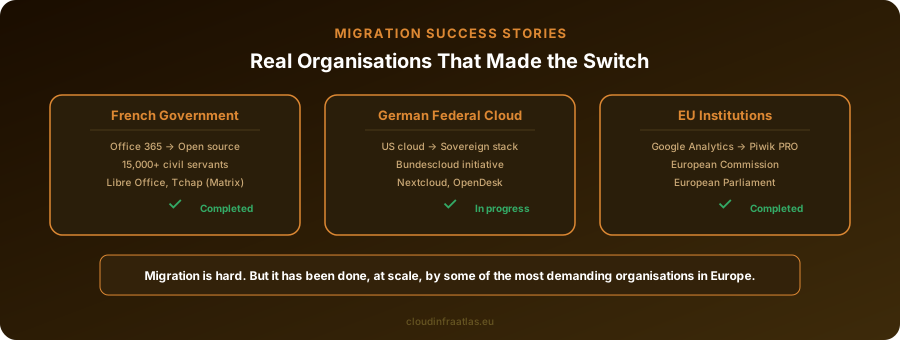
Migration Success Stories
European organisations — from national governments to municipalities to fast-growing startups — have successfully migrated off US platforms to European alternatives. These case ...
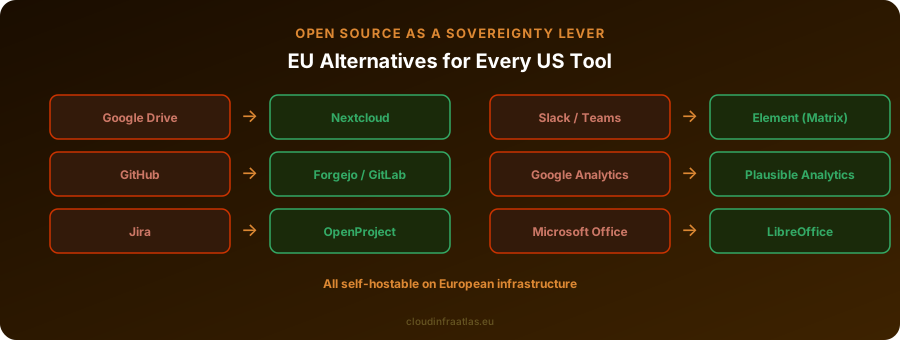
Open Source as a Sovereignty Lever
Open-source software is the most structurally durable tool for achieving digital sovereignty. When you can audit the code, self-host the infrastructure, and fork the project if ...